

Why Hyperliquid Fits HYPE Traders
Hyperliquid has emerged as the primary venue for HYPE trading because it bridges the gap between the speed of centralized exchanges and the transparency of decentralized finance. Unlike traditional platforms that rely on off-chain order books, Hyperliquid operates a fully onchain architecture. This means every trade, cancellation, and position update is recorded on its own high-performance L1 blockchain. For traders, this eliminates the opacity of hidden liquidity pools and ensures that your funds remain non-custodial—you retain control of your keys at all times.
The platform’s custom-built consensus engine allows for sub-second finality, a critical feature for executing the high-frequency strategies required in volatile HYPE markets. With over 300 perpetual and spot markets available, the liquidity depth is sufficient to support large entries and exits without significant slippage. This infrastructure supports a 24/7 trading environment, allowing traders to react instantly to market movements without waiting for traditional market hours to open. The combination of low latency and onchain verification creates a robust environment for sophisticated trading. You can monitor real-time price action and order book depth directly from the app, which syncs with the blockchain state. This transparency reduces counterparty risk, a common concern in centralized trading. As you prepare to deploy specific strategies, understanding this foundational infrastructure is essential. It provides the speed and reliability needed to capitalize on HYPE’s price volatility while maintaining full sovereignty over your capital.
5 HYPE Trading Strategies on Hyperliquid for 2026
Navigating the high-stakes volatility of Hyperliquid in 2026 demands precision, not guesswork. This section breaks down five proven HYPE trading strategies rooted in official exchange mechanics and primary market data to help you capitalize on current liquidity shifts.
1. HYPE Perpetual Futures Scalping
Scalping HYPE perpetuals demands precision timing within Hyperliquid’s high-liquidity environment. Traders exploit micro-volatility spikes during peak US and Asian session overlaps, targeting quick entries and exits to capture small price differentials. This strategy relies on strict stop-losses and rapid execution to manage the inherent risks of leveraged derivatives trading in volatile markets.
2. HYPE Spot Grid Trading Bots
Automated grid bots excel in HYPE’s sideways consolidation phases by placing buy and sell orders at predefined intervals. This systematic approach captures profit from minor price fluctuations without requiring constant manual monitoring. Traders configure grid ranges based on historical support and resistance levels, ensuring the bot operates efficiently within the asset’s typical volatility band for steady, incremental gains.

3. HYPE Funding Rate Arbitrage
Arbitrageurs monitor the funding rate differential between Hyperliquid perpetuals and spot markets to identify profitable entry points. When funding rates spike positively, traders might short the perpetual while holding spot assets to collect payments. This market-neutral strategy capitalizes on temporary imbalances in leverage sentiment, providing a steady income stream independent of directional price movements.

4. HYPE Liquidation Cascade Reversals
During sharp price drops, liquidation cascades create temporary oversold conditions that savvy traders can exploit for reversal trades. By identifying clusters of leveraged long positions getting liquidated, traders enter long positions anticipating a bounce as selling pressure exhausts. This high-risk strategy requires real-time monitoring of liquidation data and quick execution to capture the rapid price recovery.
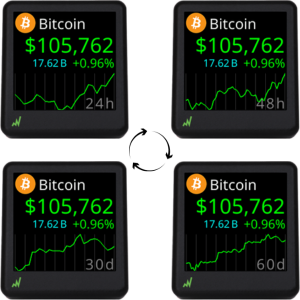
- Instant notifications
- Custom thresholds
- Multi-platform support
5. HYPE Correlation Hedging Pairs
Hedging involves pairing HYPE positions with correlated assets like SOL or BTC to mitigate downside risk. When HYPE shows strong correlation with major altcoins, traders can offset potential losses in one position with gains in the other. This strategy stabilizes portfolio volatility during broad market downturns, allowing traders to maintain exposure to HYPE’s long-term growth potential while managing short-term risk.

Risk Management for Perps Trading
Perpetual futures on Hyperliquid offer high leverage, which amplifies both gains and losses. Without strict controls, a single volatile move can wipe out your account. The primary keyword here is risk management for perps trading, and it must be the foundation of every position you take.
For real-time price action and volatility context, monitor HYPE’s chart. Hyperliquid’s interface integrates TradingView charts for technical analysis.
Tools to execute HYPE trades
Executing HYPE trades on Hyperliquid requires leveraging its specific onchain infrastructure. The platform offers a dedicated interface for 300+ perpetual and spot markets, ensuring trades are fully onchain and non-custodial. This architecture allows traders to maintain control of their assets while accessing high-leverage opportunities.
Beyond the native exchange, traders often use third-party analytics and execution bots to streamline strategy implementation. These tools provide real-time data feeds and automated order execution, which are critical for managing the high volatility associated with HYPE. Selecting the right interface depends on whether you prioritize direct exchange control or algorithmic efficiency.
| Tool | Type | Key Feature | Custody |
|---|---|---|---|
| Hyperliquid App | Exchange | 300+ markets | Non-custodial |
| Third-Party Bots | Automation | Algo execution | API-based |
| Analytics Dashboards | Data | Real-time feeds | Read-only |
Frequently asked questions about HYPE trading
Is HYPE a safe asset to trade? Hyperliquid operates on its own L1 blockchain, which prioritizes speed and low fees over the security guarantees of Ethereum. While the platform is highly liquid, trading on a native chain carries smart contract and infrastructure risks that differ from layer-2 solutions.
How are trading fees structured? Fees on Hyperliquid are generally lower than centralized exchanges due to its on-chain order book model. Traders pay a maker-taker fee schedule, with makers often receiving rebates. Check the official docs for the latest tiered rates.
What is the current HYPE price? Market data fluctuates rapidly. As of recent updates, HYPE trades around $68.93 USD with significant 24-hour volume. Always verify live prices via CoinMarketCap or the Hyperliquid interface before executing trades.
Related trading products
Secure your HYPE positions and manage risk with dedicated hardware. A hardware wallet keeps your private keys offline, protecting your assets from exchange hacks or phishing attempts while you trade on Hyperliquid. Pair this with a dedicated second monitor to track real-time order books and PnL without switching tabs, reducing execution lag during volatile moves.


As an Amazon Associate, we may earn from qualifying purchases.
No comments yet. Be the first to share your thoughts!